
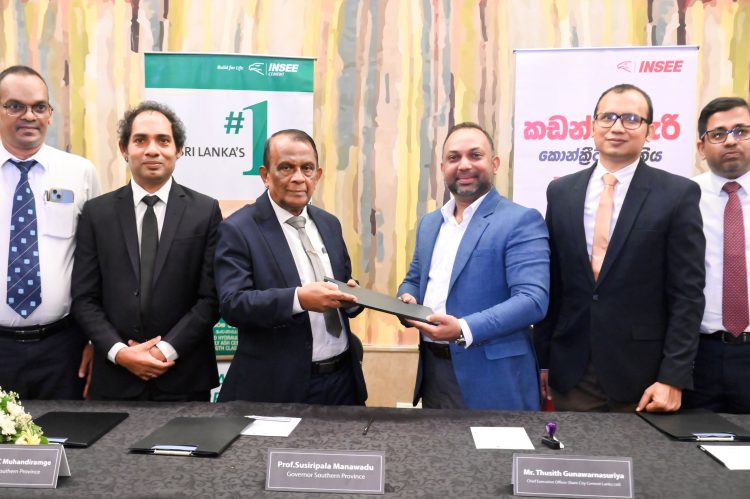
Siam City Cement Lanka Signs MoU with Southern Province to Enhance Construction Standards
Siam City Cement (Lanka) Ltd has entered into a formal partnership with the Southern Province through a Memorandum of Understanding aimed at strengthening technical capabilities within the region’s construction sector.
The agreement, signed with the Chief Secretary of the Southern Province, marks a structured effort to improve professional standards among engineers and technical officers engaged in public infrastructure and development projects.
At the core of the initiative is a series of targeted training programmes designed to address practical challenges in construction. These sessions will focus on areas such as concrete mix optimisation, quality assurance, waterproofing techniques, and adherence to national standards. By equipping professionals with updated knowledge and best practices, the programme seeks to improve both the efficiency and durability of construction work across the province.
The collaboration also reflects a broader shift toward closer coordination between public institutions and private sector expertise. By bringing together engineers from local authorities, as well as agencies such as the Road Development Authority and Irrigation Department, the programme is expected to create a more unified approach to construction practices and technical standards.
For Siam City Cement Lanka, the initiative aligns with its long-term focus on industry development beyond manufacturing. Through its INSEE Cement brand, the company has consistently positioned itself as a partner in advancing construction quality in Sri Lanka, particularly through knowledge-sharing and capacity-building efforts.
The significance of this partnership lies not only in the training itself, but in its potential long-term impact. Improved technical skills and stronger adherence to standards can lead to higher-quality infrastructure, reduced maintenance costs, and more sustainable development outcomes.
As Sri Lanka continues to invest in regional infrastructure, initiatives of this nature highlight the importance of building human capital alongside physical assets. Strengthening the knowledge base of industry professionals remains a critical factor in ensuring that development projects meet modern standards an