
Nestlé Strengthens Regenerative Agriculture Practices Across Sri Lanka’s Coconut Value Chain
Nestlé Lanka has strengthened its efforts to promote regenerative agriculture within Sri Lanka’s coconut sector through its Nestlé Coconut Development Plan, in partnership with the Coconut Cultivation Board of Sri Lanka (CCB).
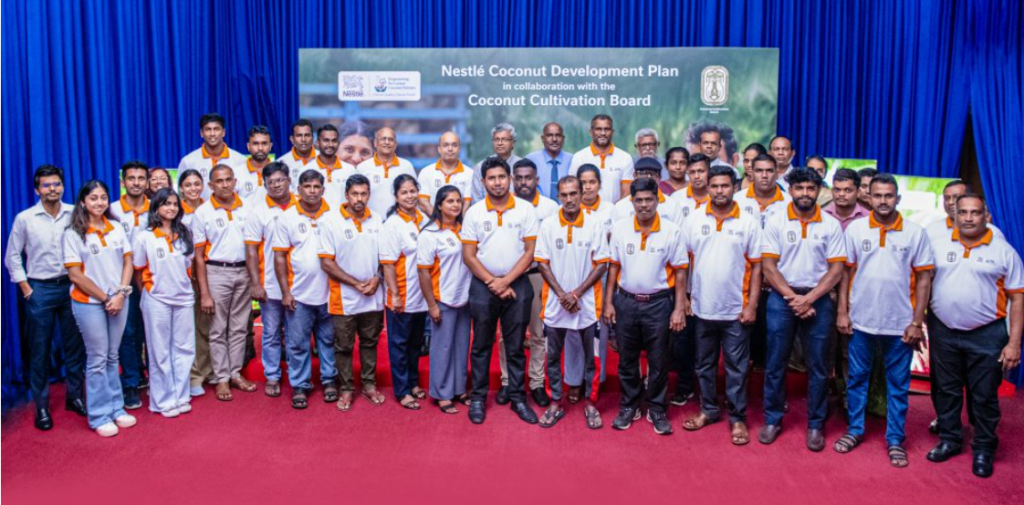
As part of the initiative, Nestlé Lanka and the CCB conducted a two-day training programme focused on regenerative agriculture practices for coconut farmers. The programme, held at the CCB’s Coconut Development Training Centre in Lunuwila, brought together 25 coconut farmers from Nestlé’s supply chain.
First introduced in 2024, the programme has now been conducted for the third consecutive year, with the latest edition expanding its focus on helping farmers adopt sustainable cultivation practices. The training aims to support improvements in coconut yields while promoting the responsible management and conservation of key natural resources, including soil and water.
The initiative forms part of Nestlé Lanka’s broader efforts to strengthen the sustainability and resilience of its coconut value chain. Through practical knowledge-sharing and capacity-building, farmers are being encouraged to incorporate regenerative agriculture techniques that can support long-term productivity while reducing pressure on the environment.
Chairman of the Coconut Cultivation Board, Dr. Sunimal Jayakody, highlighted the importance of the collaboration, noting that the programme provides farmers with valuable knowledge on regenerative agriculture while contributing to improved livelihoods and environmentally responsible farming practices.
He further noted that the initiative serves as an important platform for knowledge sharing, enabling farmers to improve cultivation methods and contribute towards the long-term sustainability of Sri Lanka’s coconut sector.
Manav Sahni, Chairman and Managing Director of Nestlé Lanka, said the company was proud to continue the regenerative agriculture training programme for farmers who form an important part of its value chain.
He noted that, as the country’s largest exporter of coconut milk powder, Nestlé Lanka has a strong interest in supporting the development of Sri Lanka’s coconut industry. According to Sahni, the latest programme builds on the previous two editions conducted with the CCB and continues to provide farmers with practical knowledge and skills that can benefit both agricultural productivity and the environment.
Nestlé Lanka has been operating in Sri Lanka for 120 years and supports the livelihoods of more than 8,000 medium- and large-scale coconut farmers through its procurement activities. The company’s Coconut Development Plan also extends benefits to home-growers, contributing to the wider development of the local coconut industry.
The company manufactures more than 90% of its products locally at its factory in Kurunegala, maintaining its focus on local production, quality and food safety.
Through continued collaboration with the Coconut Cultivation Board and coconut farming communities, Nestlé Lanka aims to strengthen sustainable agricultural practices across its supply chain while supporting farmer livelihoods and the long-term resilience of Sri Lanka’s coconut industry.